Hi, I'm Sean.
Co-founder & CTO at B3, building a crypto agent & decentralized inference. Previously Coinbase. I sweat the small details in software, and leave the good parts (components, free tools & writeups) out in the open here.

Components
all →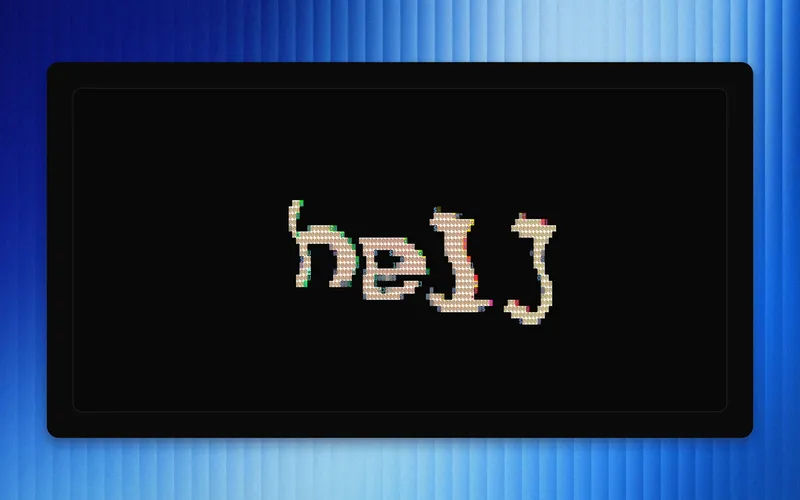
ASCII Text
3D text rendered to a wavy three.js plane, then re-sampled every frame into live ASCII characters that shimmer and follow your cursor. From B3's ai-arena.

Compact Cartridge
A 2D game-cartridge card: a clip-path cartridge silhouette with layered noisy borders, an inset media well, a label tab, and a vertical Game NFT stamp. From basement.fun.

Loading Beam
A laser-beam loading bar: a fill that races to 100% on an eased, jittery curve with a flickering glow and a blurred light at the leading edge. Pure CSS. From basement.fun.

Infinite Terrain
An endless procedural WebGL scene — streamed grass, trees, and wind lines with a physics ball you steer — that you can reskin live across six moods: night, aurora, synthwave, sakura, ember, noir. Restyled from mesq's MIT r3f original.

Isometric Cube
An isometric 3D cube in pure CSS transforms — three faces tinted from one base color (lighter top, base front, darker right), optional logo on top, optional slow spin. Extracted from explorer.b3.fun.

App Icon
A glossy iOS-style squircle app icon: SVG squircle clip, a top sheen, an inset rim, and a glare that sweeps on hover. Extracted from explorer.b3.fun.
Writing
all →
Speculative decoding and attention drift
Speculative decoding gives you 2-6x faster LLM inference with output that is provably identical in distribution to the slow path, and the proof is short enough to fit in a terminal. The interesting failure mode is newer: push the draft model too deep and its attention slides off the prompt, acceptance collapses, and EAGLE-3.1 names the mechanism and fixes it.

Real-time L1 proving: the cost curve marching down and to the left
A zkVM proved a real Ethereum mainnet block faster than its own 12 second slot, on sixteen retail GPUs. This is the cost curve and the trust model behind that line, and why it's the actual engineering schedule for 10,000 TPS.

Process vs outcome rewards
Before you tune anything on a reasoning RL run, you've already made the load-bearing decision: reward the answer or reward the steps. This walks the ORM vs PRM math on one concrete tree, shows why GRPO is quietly an outcome method, and why the reward that teaches fastest is also the easiest one in your stack to cheat.

The KV-cache architecture wars
Every open-weight architecture trick from GQA to MLA to cross-layer sharing to compressed attention is an attack on one term in the same formula. Once you see cache = 2·L·n·d_kv·bytes, the whole 2026 model war collapses into four orthogonal levers you can pull yourself.

Jolt and the lookup singularity: when every instruction is just a table lookup
Most zkVMs hand-build a constraint system for every CPU instruction. Jolt skips that and turns each instruction into a single lookup into a table you never actually build, and the sum-check protocol underneath it is the same primitive doing the heavy lifting in GKR and Spartan.

Hybrid linear attention: rationing the quadratic
Three frontier labs independently converged on the same 3:1 ratio of linear to full attention layers, and the reason isn't that linear attention got better, it's that a fixed-size state is structurally lossy. Deriving Gated DeltaNet, the memory-vs-length crossover, and why pure linear attention can't find the needle.